DMT explained as the molecule that reshapes perception and brain science
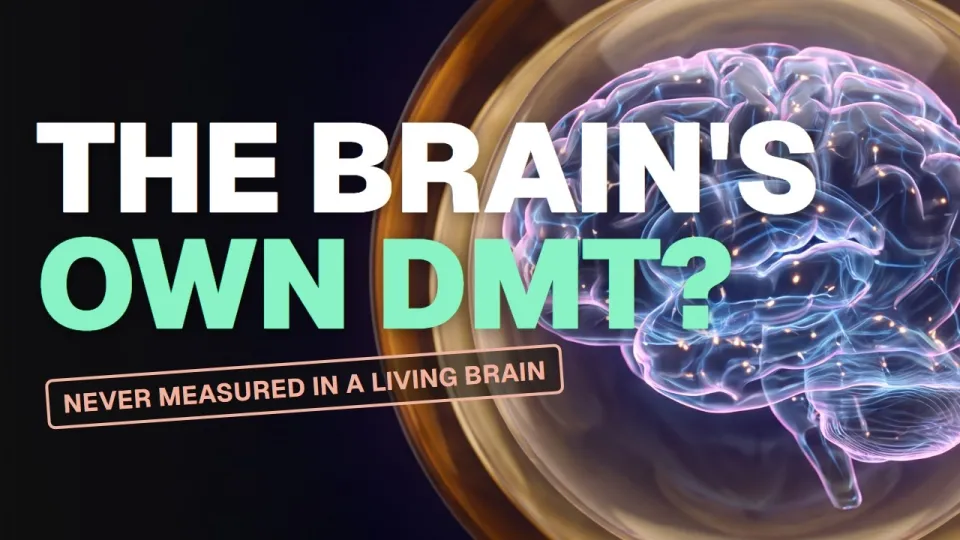
Video: DMT: The Molecule Beyond Reality | Science Documentary
DMT, or N,N-dimethyltryptamine, is a naturally occurring tryptamine that produces the most intense and shortest-lived psychedelic experience known, acting mainly on serotonin 5-HT2A receptors in the brain. It is found in hundreds of plants, in some animals, and in trace amounts in human tissue and urine. The compound is best understood as a chemical key that briefly reconfigures how the brain integrates sensory information, not as a portal to another dimension.
What is DMT and where does it come from
DMT is a simple molecule: a tryptamine core with two methyl groups attached to the nitrogen atom, structurally close to serotonin and melatonin. It occurs naturally in the bark and leaves of plants used in ayahuasca brews, in the venom of some toads, and in small quantities inside the human body. When swallowed alone, it is broken down quickly by monoamine oxidase enzymes in the gut and liver, which is why traditional Amazonian preparations combine DMT-containing plants with MAO-inhibiting plants to make it active orally. Inhaled or injected, DMT bypasses that digestive filter and reaches the brain within seconds.
How DMT works in the brain
The primary mechanism is agonism at serotonin 5-HT2A receptors, the same receptor family engaged by psilocybin and LSD. Activating these receptors changes the firing patterns of pyramidal neurons in the cortex and disrupts the brain's default mode network, the system associated with the sense of a stable self. Researchers using imaging have described increased communication between brain regions that normally do not talk to each other directly, a pattern sometimes called heightened global connectivity. The result is a cascade of unusual imagery, altered time perception and, at higher doses, a complete loss of ordinary self-awareness.
What a DMT trip feels like and how long it lasts
Duration is the defining practical feature: smoked or vaporized DMT produces effects within seconds and typically resolves in 5 to 20 minutes, while injected doses are similar. Users describe a rapid onset of geometric visuals, a buzzing or rushing sound, and a sense of being pulled into a structured environment. At higher doses the experience is called a breakthrough, in which the sense of a body and personal identity dissolves and the person reports encountering entities, architecture or landscapes that feel autonomous. Lower doses are more often reported as abstract patterns and emotional intensity rather than narrative encounters.
The pineal gland and the endogenous DMT question
One of the most repeated claims about DMT is that the pineal gland floods the brain at birth, during dreams and at death. The evidence is thinner than the story. The pineal gland does contain the enzymes needed to make DMT, and trace levels of the compound have been detected in human tissue, but no study has measured a surge sufficient to produce visions or a near-death experience. The idea remains a hypothesis, popularized by researchers such as Rick Strassman, whose clinical studies in the 1990s gave the first systematic human data on intravenous DMT. It is a plausible research question, not an established fact.
Ayahuasca, legality and safety considerations
Ayahuasca is the best-known traditional context for DMT: an orally active brew in which MAO inhibitors make the compound survive digestion. Legality varies widely by country, with DMT controlled in most jurisdictions while some religious groups hold exemptions for ceremonial use. Physiologically, DMT is not considered physically addictive, but it raises heart rate and blood pressure and can be risky for people with cardiovascular conditions or a history of psychosis. Combining it with MAO inhibitors adds serious food and drug interaction risks, including hypertensive crisis.
What science still cannot explain about DMT
The hardest questions about DMT are not chemical but experiential. Researchers still lack a full account of why the compound reliably produces encounters with seemingly independent entities, why the same geometric motifs recur across cultures, and how a molecule lasting minutes can leave long-lasting changes in outlook. Clinical interest is growing around DMT as a fast-acting treatment model for depression and as a tool for studying consciousness, but sample sizes remain small and long-term data are limited. The molecule is well mapped at the receptor level and poorly mapped at the level of meaning.
Summary
DMT is a fast-acting tryptamine that binds serotonin 5-HT2A receptors and can produce, within minutes, one of the most radical shifts in conscious experience documented in humans. Its natural presence in plants and trace amounts in the body, its short duration and its capacity to generate entity encounters make it a unique object of study. Claims about the pineal gland releasing DMT at death remain unproven, and the safety profile depends heavily on context, dose and interactions. For a deeper visual walkthrough of the molecule and its effects, see the breakdown by the channel Shroomverse, which frames DMT as a scientific puzzle rather than a mysticism shortcut.
Key takeaways
- DMT (N,N-dimethyltryptamine) is a naturally occurring tryptamine found in plants, animals and trace amounts in the human body.
- The experience lasts roughly 5–30 minutes when inhaled or injected, far shorter than LSD or psilocybin trips.
- DMT binds to serotonin 5-HT2A receptors, the same family of targets engaged by psilocybin and LSD.
- The pineal gland produces DMT in trace amounts, but no study has shown it releases enough to drive dreams or near-death visions.
- A high-dose 'breakthrough' is typically described as entering a structured, inhabited space rather than seeing simple hallucinations.
Source: DMT: The Molecule Beyond Reality | Science Documentary · Markdown version
Questions & answers
Is DMT produced in the human brain?
Trace amounts of DMT and the enzymes needed to synthesize it have been detected in human tissue, including the pineal gland. However, no study has shown the body releasing enough DMT to cause dreams, visions or near-death experiences, so the idea remains a hypothesis rather than a demonstrated mechanism.
How long does a DMT experience last?
When vaporized or injected, DMT takes effect within seconds and usually fades within 5 to 20 minutes, sometimes up to about 30. This is much shorter than LSD or psilocybin, whose effects can last 6 to 12 hours. Oral ayahuasca lasts longer because MAO inhibitors slow the compound's breakdown.
Why is DMT not active when swallowed on its own?
The gut and liver contain monoamine oxidase enzymes that rapidly break down DMT before it reaches the bloodstream in meaningful amounts. Traditional ayahuasca solves this by combining DMT-containing plants with plants that inhibit MAO, allowing the compound to become orally active and extend the experience over several hours.
Is DMT addictive or physically dangerous?
DMT is not considered physically addictive, and it does not produce classic withdrawal syndromes. It does raise heart rate and blood pressure and can be hazardous for people with cardiovascular problems or a predisposition to psychosis. Combining it with MAO inhibitors carries additional interaction risks, including dangerous spikes in blood pressure.